...

Biography of Dalia Mogahed

Dalia Mogahed

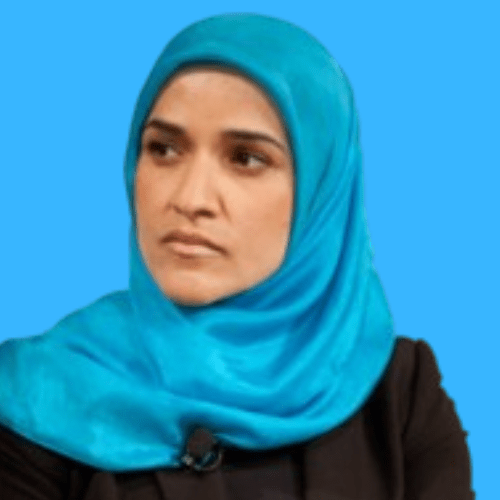
Dalia Mogahed (ุฏุงู„ูŠุง ู…ุฌุงู‡ุฏ) is one of the most influential American Muslim scholars and researchers of her generation. As a pollster, advisor, and public intellectual, she has dedicated her career to providing data-driven insights into the beliefs and attitudes of Muslims worldwide, challenging stereotypes and fostering a more nuanced understanding between Muslim communities and the West. Mogahed is renowned for co-authoring the groundbreaking book Who Speaks for Islam? What a Billion Muslims Really Think and for her historic appointment as the first Muslim-American woman in hijab to serve in a senior advisory role in the White House. Her work bridges the gap between empirical data and public policy, making her a vital voice in conversations about Islam, integration, and international relations.

Early Life and Education

Dalia Mogahed was born in Cairo, Egypt, in 1974 to Elsayed and Nagwa Mogahed. At the age of four, she immigrated with her family to the United States. Growing up in an Egyptian-American Muslim household, she navigated the complexities of a bicultural and bi-religious society, which profoundly shaped her perspective and future work. Her academic path was not initially in social sciences. She earned a Bachelorโ€™s degree in Chemical Engineering with a minor in Arabic from the University of Wisconsin-Madison. Following her undergraduate studies, she pursued a Master of Business Administration (MBA) from the Joseph M. Katz Graduate School of Business at the University of Pittsburgh. This unique background in engineering and business equipped her with rigorous analytical and quantitative skills. A major turning point in her career was the aftermath of the September 11th attacks. Witnessing the rampant misinformation and stereotypes about Muslims, she felt a compelling need to move from the corporate world to a field where she could use data to tell the true story of her community.

Career and Leadership

Mogahedโ€™s career is marked by leadership roles in premier research institutions and a historic advisory position at the highest level of the U.S. government. From 2006 to 2012, she served as the Executive Director of the Gallup Center for Muslim Studies, a non-governmental research center that provided data and analysis on the views of Muslim populations across the globe. During this time, she led the most extensive poll of its kind, a multi-year effort surveying tens of thousands of Muslims in over 50 countries. This monumental project culminated in the 2007 book she co-authored with Professor John L. Esposito, Who Speaks for Islam? What a Billion Muslims Really Think. The book became a definitive resource for policymakers, academics, and the public, directly challenging the narrative that Muslims were a monolithic bloc driven by extremism. In 2009, President Barack Obama appointed Mogahed to the Presidentโ€™s Advisory Council on Faith-Based and Neighborhood Partnerships. This appointment was a landmark event, as she became the first Muslim woman wearing a hijab to hold such a high-profile advisory role in the White House. She provided crucial insights on how the U.S. government could better engage with Muslim communities both domestically and abroad. After her tenure at Gallup, Mogahed became the Director of Research at the Institute for Social Policy and Understanding (ISPU) in Washington, D.C. At ISPU, she continues her pioneering work, leading research on American Muslims to empower them with data and provide policymakers and the public with factual, evidence-based resources. She has delivered several widely acclaimed TED Talks, including โ€œWhat itโ€™s like to be Muslim in America,โ€ which have been viewed millions of times.
AttributeDetails
Full NameDalia Mogahed (ุฏุงู„ูŠุง ู…ุฌุงู‡ุฏ)
Date of Birth1974
Age51 (as of 2025)
BirthplaceCairo, Egypt
GenderFemale
OccupationResearcher, Pollster, Author, Public Speaker, Advisor
EducationB.S. Chemical Engineering (University of Wisconsin-Madison), MBA (University of Pittsburgh)
Known ForCo-authoring Who Speaks for Islam?, serving on President Obama's Advisory Council, leading research at ISPU.

Career Timeline

1974
Birth
Dalia Mogahed is born in Cairo, Egypt.
c. 1978
Immigration to the United States
Her family moves to the U.S., where she is raised and educated.
c. 1990s
University Education
She earns a B.S. in Chemical Engineering from the University of Wisconsin-Madison and an MBA from the University of Pittsburgh.
2006
Joins Gallup as Executive Director
Mogahed is appointed Executive Director of the Gallup Center for Muslim Studies, spearheading unprecedented global research on Muslim attitudes.
2007
Publication of Landmark Book
She co-authors Who Speaks for Islam? What a Billion Muslims Really Think with John L. Esposito, presenting the findings of Gallup's multi-year poll of the Muslim world.
2009
White House Appointment
President Barack Obama appoints her to the President's Advisory Council on Faith-Based and Neighborhood Partnerships, making her the first Muslim-American woman in hijab to serve in this capacity.
2012
Departure from Gallup
Mogahed concludes her groundbreaking work at the Gallup Center for Muslim Studies.
Post-2012
Director of Research at ISPU
She joins the Institute for Social Policy and Understanding (ISPU) as the Director of Research, where she continues to lead vital studies on American Muslim communities.
2016
Delivers Influential TED Talk
Her TED Talk, "What it's like to be Muslim in America," is released, reaching a global audience of millions and becoming a key resource for understanding the American Muslim experience.
Present โ€“ Continued Leadership and Advocacy
Dalia Mogahed continues to lead research at ISPU, speak at major international forums, and provide expert commentary on issues affecting Muslims globally, cementing her legacy as a leading voice of her generation.

Philosophy and Views

Dalia Mogahedโ€™s approach is firmly rooted in empiricism. She believes that anecdote and speculation should be replaced with rigorous, large-scale data. Her core philosophy is that to understand what a billion Muslims really think, one must ask them directly. Her work consistently demonstrates that the vast majority of Muslims share the same aspirations for jobs, peace, and a better future as people of other faiths. She often speaks on contemporary issues such as Islamophobia, womenโ€™s rights in Islam, and civic engagement. On the topic of extremism, her research makes a clear distinction between the deeply held religious beliefs of mainstream Muslims and the political grievances that fuel violent fringe groups. She has stated, โ€œThe sources of radicalization are not in the mosque, they are in the prisons and on the Internet. It is a political phenomenon, not a theological one.โ€ While widely respected, her appointment to the White House council drew criticism from a small number of anti-Muslim commentators who sought to link her to extremist ideologies. These claims were widely refuted by mainstream interfaith leaders and academics, who defended her record of promoting mutual understanding and condemned the accusations as baseless Islamophobia. Mogahed handled the criticism with grace, continuing to focus on her data-driven work as the best response to misinformation.

Personal Life and Challenges

Dalia Mogahed is a wife and mother, though she maintains a private stance on her family life. The primary challenge she has faced throughout her career is navigating the highly polarized and often hostile environment of post-9/11 America as a visible and vocal Muslim woman. She has overcome significant prejudice and scrutiny to become one of the most credible and sought-after voices on Muslims in the Western world. Her character is widely perceived as one of intellectual honesty, courage, and unwavering dedication to building bridges through knowledge.

Legacy and Impact

Dalia Mogahedโ€™s legacy is that of a trailblazer who fundamentally changed the conversation about Islam and Muslims. By bringing the tools of modern polling and data science to the study of a global faith community, she empowered Muslims with a voice backed by numbers and provided non-Muslims with an invaluable window into their world. Her work continues through the ongoing research at ISPU, which publishes an annual American Muslim Poll and other critical studies. Her book remains a foundational text in universities, and her TED Talks are essential viewing for anyone seeking to understand the Muslim experience. Dalia Mogahedโ€™s impact lies in her successful effort to replace fear with facts, and her enduring legacy is a more informed and empathetic global dialogue.

It seems we can't find what you're looking for.

Share this post

ZAKAH CALCULATOR

Deductions

Totals