...

The Importance of the Day of Arafah

The Day That Stops Time: Everything a Believer Needs to Know About Arafah

On the ninth of Dhul Hijjah, heaven draws closer than it does on any other day of the year. Here is what that means for you.

Dhul Hijjah

There is a day in the Islamic calendar that the Prophet ๏ทบ described as Hajj itself. Not a day within Hajj. Not the most important day of Hajj. Hajj itself โ€” the entire fifth pillar of Islam โ€” compressed into a single day, available to every believer on earth whether they stand on the plains of Makkah or in their kitchen before Maghrib.

โ€œAl-Hajj โ€˜Arafah,โ€ he said. Arafah is the Hajj.

If you have ever felt the ache of watching Hajj from a distance โ€” watching the pilgrims on television, white-clad and weeping, and feeling something between longing and loss โ€” understand this: the heart of what they are experiencing is available to you on the ninth of Dhul Hijjah, wherever you are. The plains of Arafah extend, spiritually, to every place a believer fasts and calls out to Allah on that day.

That is not consolation. That is the actual teaching of the Prophet ๏ทบ

What Arafah Actually Is

The Day of Arafah falls on the ninth of Dhul Hijjah โ€” the twelfth and final month of the Islamic calendar. It is the second day of Hajj, and it is the axis around which the entire pilgrimage turns. Everything before it is preparation. Everything after it is a response.

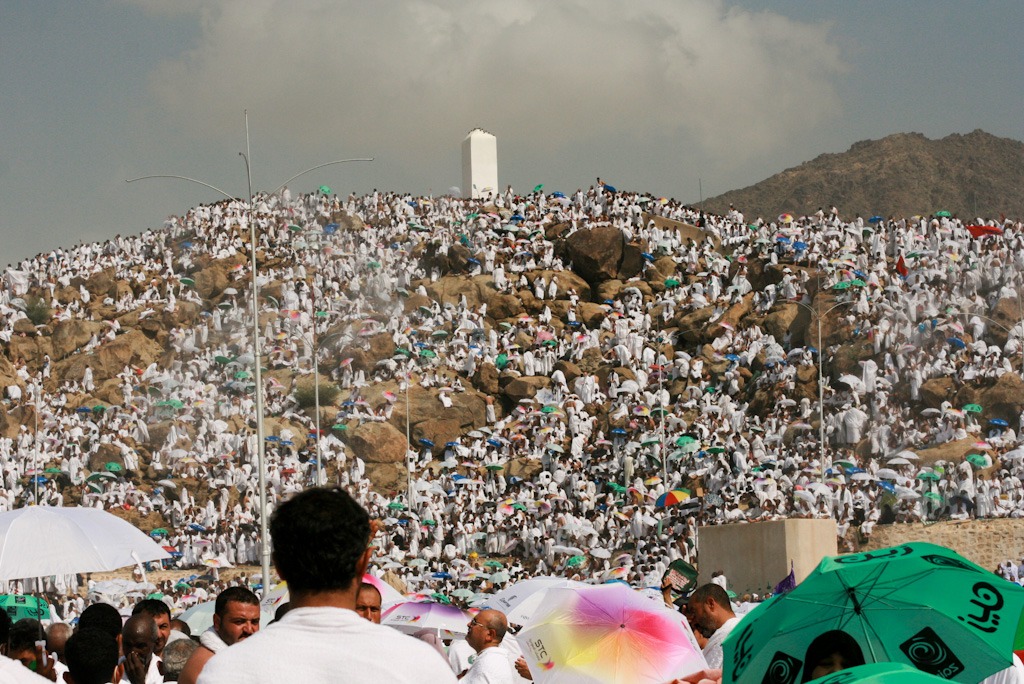
For the pilgrims, Arafah begins at dawn with the journey from Mina to the plain of Arafah โ€” a vast, open expanse outside Makkah where millions of people gather in a state of ihram, stripped of every worldly marker, equal before Allah in a way that no earthly gathering has ever replicated. They stand there โ€” or sit, or lie down; the standing of Arafah requires only presence within its boundaries, not a particular posture โ€” from noon until sunset. They pray Dhuhr and Asr combined. They make duโ€™a. They weep. They ask.

If a pilgrim misses the standing of Arafah, they miss Hajj entirely. This single requirement โ€” be present in Arafah on this day โ€” is so central that missing it invalidates the entire pilgrimage. That tells you everything about what this day carries.

For those not performing Hajj โ€” which is most of us, most years โ€” the day is still available. Its spiritual weight does not belong exclusively to the pilgrims. It belongs to the entire Ummah.

What Allah Does on This Day โ€” and Why It Should Move You

The hadith that describes Arafahโ€™s virtue is one of the most astonishing statements in the entire prophetic tradition. Aisha, the Mother of the Believers โ€” may Allah be pleased with her โ€” narrated that the Prophet ๏ทบ said:

โ€œThere is no day on which Allah sets free more servants from Hell than the Day of Arafah. He draws near, then boasts of them to the angels, saying: โ€œWhat do these want?โ€

Sit with the layers of that.

Allah draws near. On this specific day, the closeness of Allah to His creation is described in a way that appears nowhere else in the hadith literature with quite this texture. He draws near. And then โ€” in a display of divine pride that no human relationship can adequately parallel โ€” He directs the angelsโ€™ attention to His servants. Look at them. What do they want?

As though He does not know. As though the question is not about information but about something else entirely โ€” about honoring the act of turning toward Him, of acknowledging the seeking itself as something worthy of divine attention and angelic witness.

No day in the year sees more souls freed from Hellfire than this one. Not Laylatul Qadr, not the first night of Ramadan, not Eid. Arafah. The ninth of Dhul Hijjah. The day when the plains outside Makkah fill with weeping pilgrims โ€” and the day when you, wherever you are, can fast and call out to the same Lord and be counted among those He is drawing near to.

The Day Islam Was Completed

Arafah carries another distinction that belongs to no other day in Islamic history. It was on the Day of Arafah โ€” during the Prophetโ€™s ๏ทบ farewell Hajj, the only Hajj he performed โ€” that Allah revealed the ayah that completed the religion:

โ€œThis day I have perfected for you your religion and completed My favor upon you and have approved for you Islam as your religion.โ€ (Al-Maโ€™idah 5:3)

When Umar ibn al-Khattab heard this verse, he wept. A companion asked why โ€” was this not a cause for celebration? Umar said: what follows completion? Decline. He understood that the seal of revelation meant the Prophetโ€™s time was drawing near.

But the verse itself is staggering in its significance. On this day โ€” this specific ninth of Dhul Hijjah, on the plain of Arafah, in the presence of the Prophet ๏ทบ and his companions โ€” Allah declared Islam complete. The religion you practice, the faith you carry, the duโ€™as you make on Arafah โ€” they belong to a religion that Allah Himself declared finished and approved on this very day.

When you fast Arafah, you fast on the anniversary of Islamโ€™s completion. Let that land.

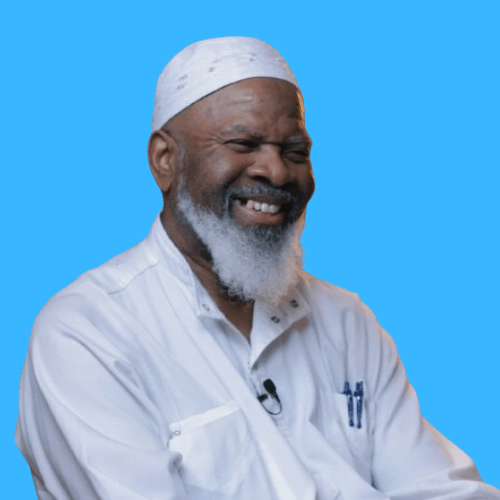
Iโ€™m on the advisory board of this great organization, Basmah. And Iโ€™m saying to you, from a man on the inside, they do a lot of incredible work. Iโ€™m amazed every day by more and more work; they donโ€™t stop, they never stop.
Imam Siraj Wahhajย ย 

Imam Siraj Wahhaj

Honorary advisor of BASMAH

Fasting Arafah โ€” The Most Consequential Single Day's Fast in the Year

For those not performing Hajj, fasting the Day of Arafah is among the most recommended acts in the entire Islamic year. The Prophet ๏ทบ was asked about it and his answer required no elaboration:

โ€œIt expiates the sins of the preceding year and the coming year.โ€

Two years. One fast. The arithmetic of divine generosity operates entirely beyond worldly logic.

Note something important here: the scholars specify that this expiation applies to minor sins. Major sins require specific repentance โ€” tawbah, remorse, resolution to change, and where applicable, making right what was wronged. Arafah fasting is not a blanket override for everything. But for the accumulated weight of a yearโ€™s worth of small failures โ€” the lapses in patience, the moments of heedlessness, the prayers offered carelessly, the words spoken without enough thought โ€” this single fast washes it away.

And then it reaches forward. The coming year too. You are fasting today for sins you have not yet committed, establishing a buffer of divine mercy that precedes you into the next twelve months.

This is why missing Arafah fast โ€” when you are able โ€” is a genuine loss. Not a moral failure. Not a catastrophe. But a real, specific, measurable loss of something that will not come back around for another full year.

The fast is straightforward: from Fajr to Maghrib, no food and no drink, with the intention made for Arafah specifically. What fills the hours between those two prayers is what distinguishes an ordinary fast from a transformative one.

An Important Distinction: Pilgrims Do Not Fast Arafah

This is worth knowing clearly and passing on. The ruling for pilgrims is the opposite โ€” it is better for them not to fast on Arafah. The Prophet ๏ทบ explicitly discouraged fasting for those standing on the plain of Arafah on that day.

The wisdom the scholars articulate is practical and compassionate: the pilgrim needs strength. Arafah requires standing, supplicating, remaining present and engaged for hours in often intense heat. Fasting would diminish their capacity for worship rather than enhance it. For the pilgrim, Arafah is a feast day โ€” a day of sustained, energetic devotion that a weakened body would undermine.

So the division is clear: for the pilgrim on the plain, no fast. For the rest of the Ummah, scattered across the world and watching from a distance โ€” fast. The two groups worship the same Lord on the same day through different means, each suited to their circumstances.

The Best Du'a of the Year โ€” And What to Say

The Prophet ๏ทบ described Arafah as the best day for supplication. And he identified the best duโ€™a to make on it โ€” the duโ€™a he said himself, the duโ€™a the prophets before him said:

โ€œLa ilaha illallahu wahdahu la sharika lah, lahul mulku wa lahul hamdu wa huwa ala kulli shayโ€™in qadir.โ€

There is no god but Allah, alone, without a partner. To Him belongs all sovereignty, to Him belongs all praise, and He has power over all things.

This is the Tahleel โ€” the declaration of divine oneness โ€” in its most complete form. It is not a request. It is a declaration. It is the heartโ€™s orientation stated plainly before anything else is asked. And the Prophet ๏ทบ named it the best thing he and all the prophets before him said on this day.

Begin with it. Return to it throughout the day. Let it be the thread that runs through all your other supplications.

Then โ€” ask. Ask for everything. The duโ€™a of Arafah is not a place for restraint or brevity or wondering whether your requests are too much. Allah drew near on this day specifically to receive what you bring Him. Bring everything.

Ask for forgiveness by name โ€” not just generally, but the specific things that sit heavy. Ask for those you love, naming them. Ask for the Ummah โ€” for the suffering, the displaced, the imprisoned, the grieving. Ask for Jannah with the longing it deserves. Ask for protection from the Fire with the seriousness that threat deserves. Ask for guidance, for health, for provision, for a good death, for mercy in the grave, for safety on the Day of Judgment.

The hour before Maghrib is particularly precious. The scholars note that this final stretch of Arafah โ€” the sun descending, the day nearly spent โ€” carries an intensity of divine attention that marks it as distinct even within a day already unlike any other. Guard that hour. Put the phone down. Turn toward your Lord. Pour out whatever remains.

Sadaqah on Arafah โ€” Giving on the Day Heaven Is Closest

Every act of worship during Dhul Hijjah carries amplified reward. On Arafah specifically โ€” the peak of the peak โ€” Sadaqah takes on a particular resonance.

There is something theologically coherent about giving on this day. Arafah is the day of divine generosity at its most visible โ€” Allah freeing more souls from Hell than any other day, drawing near to His servants, accepting their turning toward Him. Responding to that generosity with generosity of your own is not coincidence. It is participation in the spirit of the day.

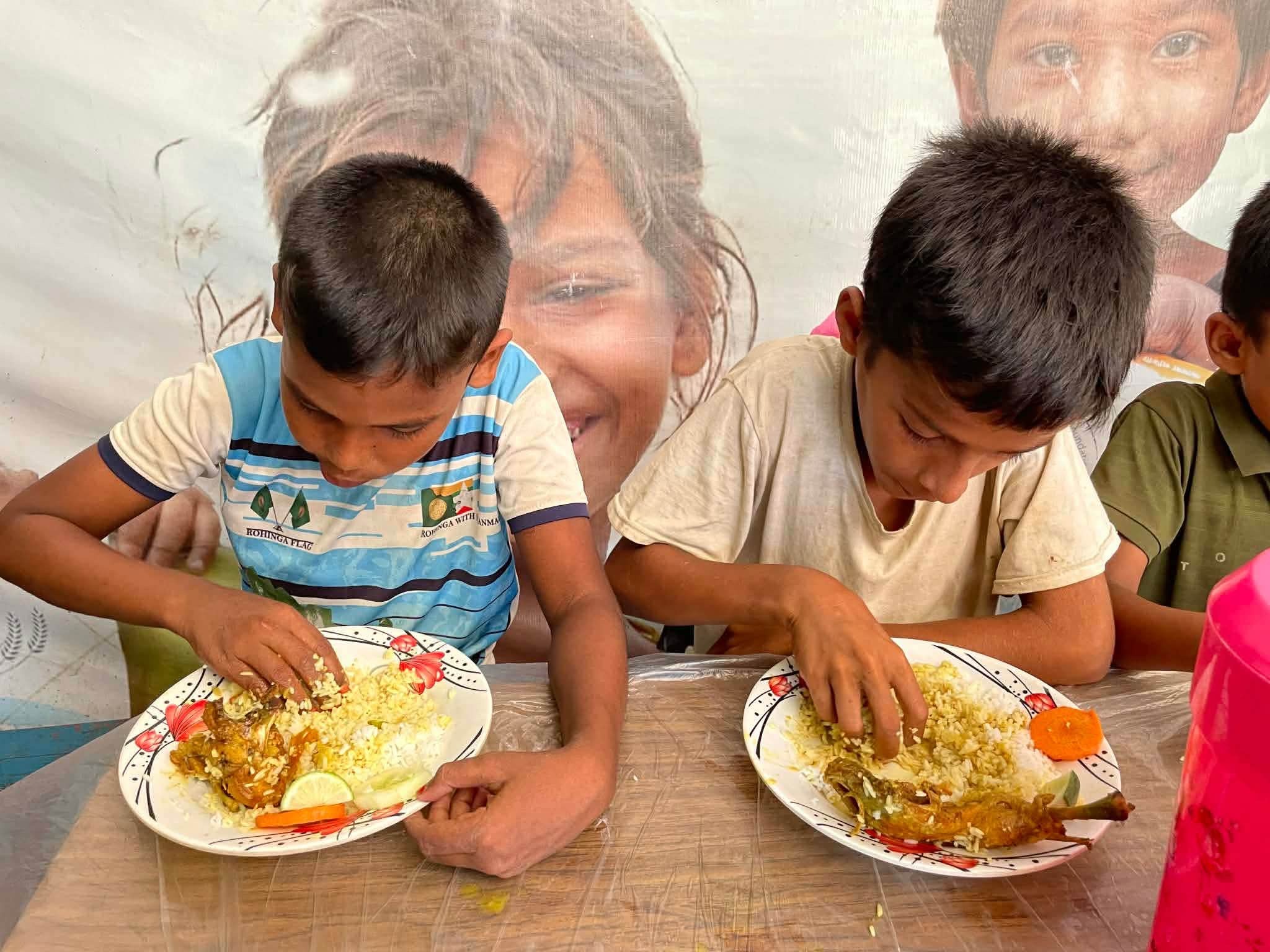
Give to those who are hungry. Give to support families who cannot afford Qurbani. Give to the orphan, the widow, the student who needs one more month of support to finish their education. Give to the cause that has been sitting in your intention for months, waiting for the right moment โ€” this is the right moment.

You do not need to give a large amount for it to matter. What matters is the intention and the timing. A small Sadaqah on Arafah, given sincerely, on the day when Allah is drawing near and the angels are witnessing โ€” that is not a small thing by any measure that actually counts.

How to Live the Day of Arafah โ€” Practically, Honestly

Begin the night before. Sleep early. Set an alarm that gives you time before Fajr for istighfar and duโ€™a while the house is quiet. Make your intention for the fast of Arafah clearly and consciously.

After Fajr, resist the immediate pull of the phone. Sit for a few minutes with Quran or with quiet dhikr. Let the day begin in a register different from every other day.

Throughout the morning, keep the Takbeer and Tahmeed on your lips. Allahu Akbar. Alhamdulillah. La ilaha illallah. Let it run in the background of whatever work the day requires.

After Dhuhr, begin to shift your attention more fully toward duโ€™a. If your circumstances allow, take time specifically for supplication. If work or family makes that impossible, use every available minute โ€” the lunch break, the commute, the moments between tasks.

From Asr until Maghrib โ€” protect this. Protect it seriously. This is Arafahโ€™s golden hour. Sit with your hands raised or your head bowed and bring everything you have been carrying. Speak to Allah the way you would speak to the being who loves you most and can do everything โ€” because that is precisely who He is.

Break your fast simply. A date, some water. Say the duโ€™a of iftar. And carry the stillness of the day into the evening with gratitude for having been alive to receive it.

The Day That Comes Once

Arafah comes once a year. This specific Arafah โ€” in this particular chapter of your life, with the specific sins you are carrying, the specific people you love, the specific dreams and fears and hopes that are yours right now โ€” will not come again.

Next yearโ€™s Arafah will come to a different version of you, in different circumstances, carrying different weight. This one belongs to who you are today.

That is not a burden. It is an invitation. An urgent, generous, once-a-year invitation from a Lord who loves you enough to set aside a day โ€” the greatest day of the greatest month โ€” specifically for the purpose of drawing near to His servants and freeing them from what they cannot free themselves from.

Fast the day. Fill it with duโ€™a. Give Sadaqah. Make the Takbeer. Weep if you can โ€” and if tears do not come easily, make the face of someone weeping and the heart will often follow.

Allah is closer on this day than on any other. He drew near. He boasted of you to His angels. He is asking โ€” with the knowledge that already encompasses the answer โ€” what do these people want?

Tell Him. Tell Him everything.


Arafah is the ninth day of Dhuโ€™l-แธคijjah, the 12th and final month in the Islamic calendar. It occurs on the second day of the Hajj pilgrimage to Makkah.

Muslims on pilgrimage usually make their way to the mountain of Arafah. After Fajr prayer until sunset, they stand in devotion, praying and supplicating for mercy and forgiveness.


On this day, the Prophet Muhammad gave his farewell sermon upon Mount Arafah to the many Muslims with whom he completed Hajj, near the end of his life.

Arafah is the ninth day of Dhuโ€™l-แธคijjah, the 12th and final month in the Islamic calendar.


As for this day for non-pilgrims, it is one of the best deeds, and the Prophet (SAW), said that fasting expiates for the year before it and the year after.

Related Posts

Share this post

ZAKAH CALCULATOR

Deductions

Totals