 Skip to content
What is Dhul Hijjah?
What Is Dhul Hijjah? The Month That Closes the Year With the Greatest Gift Allah Ever Gave
Understanding the final month of the Islamic calendar — and why it deserves far more than we typically give it
- Apr 14, 2026
- The Meaning Behind the Name
- Where Dhul Hijjah Sits in the Sacred Architecture of the Year
- The Ten Days That Surpass All Others
- Hajj: The Fifth Pillar Performed in These Sacred Days
- The Day of Arafah: The Heart of the Entire Month
- Eid al-Adha: The Celebration That Ibrahim Built
- Qurbani: What It Is, Who It Applies To, and What It Means
- What Dhul Hijjah Asks of the Muslim Who Cannot Go to Hajj
- Dhul Hijjah as the Year's Final Word

The Islamic year does not end quietly.
Most calendars taper off — the final month arriving with the faint exhaustion of a year nearly spent, the energy of January’s intentions long dissolved into the ordinary rhythm of life. But the Islamic calendar closes differently. It closes with Dhul Hijjah. And Dhul Hijjah does not taper. It erupts — into the most sacred days of the entire year, the greatest gathering of humanity in human history, the commemoration of the most extraordinary act of surrender ever recorded, and a divine generosity so vast that a single day within it can erase two years of accumulated sin.
If you have ever wondered why Muslims speak about Dhul Hijjah with a particular kind of reverence — a reverence that even exceeds, in certain specific ways, the awe reserved for Ramadan — this is why.
The Meaning Behind the Name
Dhul Hijjah. In Arabic, the name means “The Possessor of Hajj” — or more simply, “The Month of Pilgrimage.” It is the twelfth and final month of the Islamic lunar calendar, and it was named for the single most defining event it contains: Hajj, the pilgrimage to Makkah that stands as the fifth pillar of Islam.
But to reduce Dhul Hijjah to merely “the Hajj month” is to miss the depth of what it carries. Yes, Hajj happens within it. But so does Eid al-Adha, the greatest festival of the Islamic year. So does the Day of Arafah, the day on which Allah frees more souls from Hellfire than on any other day. So do the first ten days — a window the Prophet ﷺ declared unmatched by any other period in the entire calendar for the beloved nature of good deeds done within them.
Dhul Hijjah is not a month named for one event. It is a month that carries the weight of the entire tradition — the story of Ibrahim ﷺ and his total surrender, the culmination of the Islamic year’s spiritual arc, and an annual invitation from Allah to every believer on earth to draw closer to Him than they have been at any other point in the preceding twelve months.
Where Dhul Hijjah Sits in the Sacred Architecture of the Year
- Allah designated four months as sacred in the Quran — months in which the weight of every action, for good and for harm alike, is amplified beyond what ordinary days carry. Dhul Qadah, Dhul Hijjah, Muharram, and Rajab. In Surah At-Tawbah, Allah states plainly: “Indeed, the number of months with Allah is twelve. Four of them are sacred. So do not wrong yourselves during them.”
- The instruction is significant. Do not wrong yourselves during these months. The amplification runs in both directions — good deeds earn more, and harmful deeds carry heavier consequences. These are not months for spiritual coasting. They are months that demand intentionality.
- Among these four sacred months, Dhul Hijjah holds a particular distinction. It is the only one that contains all of the following simultaneously: the Hajj pilgrimage, the Day of Arafah, Eid al-Adha, Qurbani, and the ten days that Allah honored with a divine oath in the Quran itself. When Allah swears by something in His own Book — “By the dawn. By the ten nights” (Surah Al-Fajr) — that something has earned a category of significance that no human ranking can adequately express.
- The scholars are nearly unanimous: those ten nights are the first ten nights of Dhul Hijjah. Allah swore by them. Let that sit for a moment before moving on.
The Ten Days That Surpass All Others
- The most beloved days in the sight of Allah. That is not a scholarly opinion or a pious exaggeration — it is the direct statement of the Prophet ﷺ, preserved in Sahih al-Bukhari, one of the most rigorously authenticated collections of hadith in Islamic scholarship.
- “There are no days during which righteous deeds are more beloved to Allah than these ten days.”
- The companions, hearing this, pushed back with the obvious question. Not even Jihad fi sabilillah — striving in the path of Allah, the act of giving one’s life for the faith? Not even that, the Prophet ﷺ confirmed, except for the one who goes out with everything and returns with nothing.
- These were people who had sacrificed their homes, their families, their safety, their livelihoods for Islam. And the Prophet ﷺ told them that what could be done in these ten days — in ordinary homes, in ordinary life, through fasting and prayer and charity and remembrance — surpassed even that. The scale of the statement has not diminished across fourteen centuries. It arrives today exactly as it arrived when first spoken.
- What does this mean practically? It means that the Salah you pray during these ten days is more beloved to Allah than the same Salah on any other day. The Sadaqah you give carries an amplified reward. The Quran you recite lands differently. The du’a you make rises in a spiritual atmosphere unlike any other point in the year. The fast you observe carries the personal reward of a year’s fasting for each day. Every seed of good intention planted in this soil grows into something the Akhirah alone can measure.
- And this is available to every believer. Not only the wealthy who can afford Hajj. Not only the scholars whose worship is sophisticated. Not only the consistent ones whose spiritual practice has no gaps. Every Muslim, wherever they are standing when these ten days arrive, has equal access to what they offer. Allah’s mercy during Dhul Hijjah is not means-tested.

Hajj: The Fifth Pillar Performed in These Sacred Days
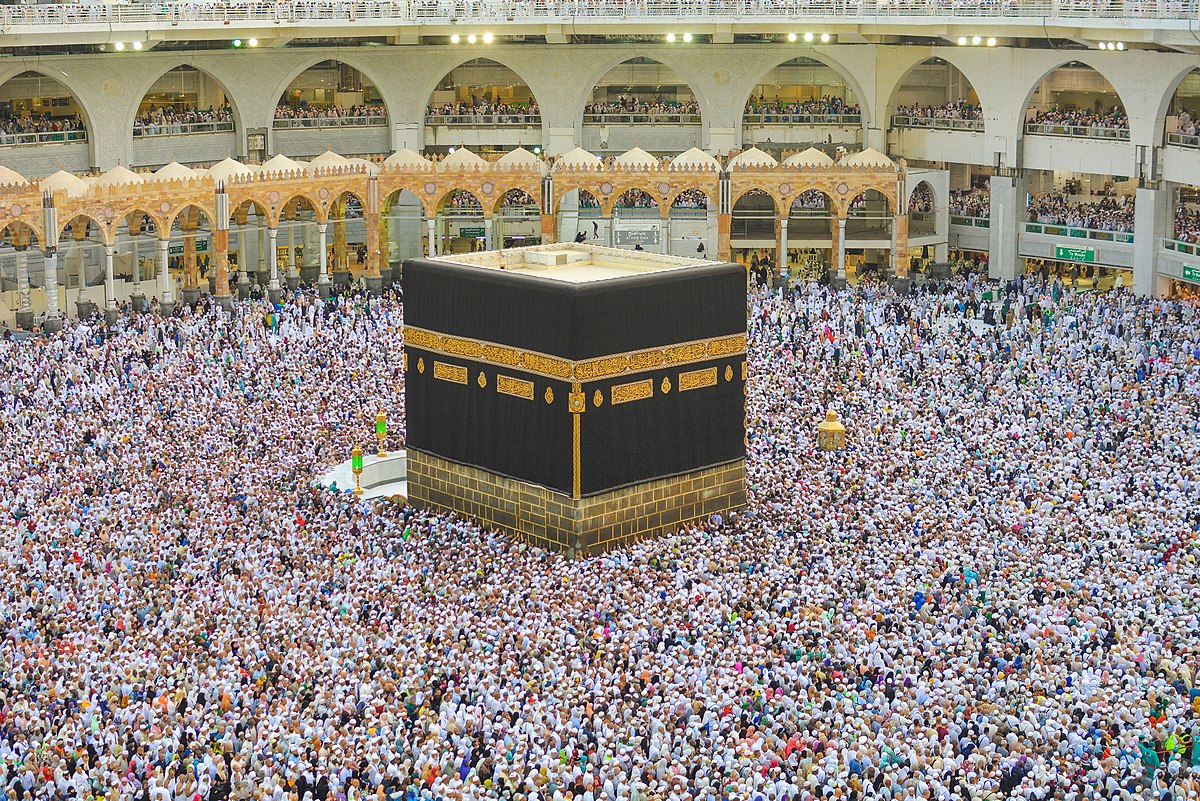
Hajj is the pilgrimage to Makkah — the fifth and final pillar of Islam, obligatory once in a lifetime for every Muslim who possesses the physical health and financial means to perform it. During Dhul Hijjah, millions of believers from every corner of the earth converge on Makkah in what is arguably the largest annual gathering of human beings anywhere on the planet.
They arrive in ihram — two pieces of unstitched white cloth that strip away every worldly marker of status, wealth, nationality, and distinction. A king in ihram and a laborer in ihram are visually indistinguishable. That is the point. Before Allah, the only distinction that has ever mattered is taqwa — God-consciousness — and Hajj makes this visible in the most literal way imaginable.
The pilgrims circle the Ka’aba, run between the hills of Safa and Marwa retracing Hajar’s desperate search for water, travel to Mina, stand on the plain of Arafah, spend the night at Muzdalifah, stone the Jamarat at Mina, and perform their Qurbani. Each ritual traces the footsteps of Ibrahim ﷺ, Hajar, and Ismail ﷺ — a family whose surrender to Allah was so complete that Allah made their story the permanent pillar of an entire religion’s most important act of worship.
The Prophet ﷺ said: “Whoever performs Hajj for the sake of Allah and does not commit any obscenity or wrongdoing, he will return as the day his mother gave birth to him.” A complete reset. Sins not merely forgiven but erased entirely — the record returning to the state of a newborn.
For those who cannot perform Hajj this year — whether due to financial constraint, health, distance, or circumstance — the divine mercy of these days extends to them fully. The rewards of this period are not restricted to Makkah. They cover every believing heart that turns toward Allah during this window, wherever that heart is located.
The Day of Arafah: The Heart of the Entire Month
The ninth of Dhul Hijjah is the axis around which the entire month turns. For pilgrims, it is the day of standing on the plain of Arafah — the moment without which Hajj itself is invalid. The Prophet ﷺ said: “Al-Hajj ‘Arafah” — Hajj is Arafah. Miss this day and you have missed the pilgrimage entirely, regardless of everything else performed.
On this plain — vast, open, equal — millions of pilgrims stand from noon until sunset in a state of total devotional exposure. No masks of worldly identity. No performance for an audience. Just the servant before the Lord, asking for what only the Lord can give.
The significance of Arafah extends beyond the pilgrimage itself into something that reshapes how we understand divine generosity. The Prophet ﷺ reported that Allah descends to the nearest heaven on this day and draws near to His servants — and then, in a display of divine pride that human language can only approximate, directs the angels’ attention to the people calling out to Him. “Look at My servants. What do they want?” He knows. He has always known. But the question itself is an act of honoring — the Creator of existence acknowledging the turning of the created toward Him as something worthy of divine attention and angelic witness.
His promise on this day is without parallel in the hadith literature: more souls are freed from Hellfire on Arafah than on any other day of the year. And fasting this day — for those not performing Hajj — carries the specific reward the Prophet ﷺ named directly when asked: expiation for the sins of the preceding year and the coming year.
This is the day to reserve your deepest du’as. Your most honest requests. Your most sustained attention. Bring everything you have been carrying. Allah is listening on Arafah with a particular attentiveness He Himself described — and He is not in the habit of turning away the servant who came.
The plain of Arafah also carries a significance that predates Islam itself. It is believed to be the location where Adam ﷺ and Hawwa reunited after their descent to earth — two souls separated by consequence, reunited by divine mercy. And it is where the Prophet ﷺ delivered his farewell sermon, speaking for the last time to the assembled Ummah, sealing fourteen years of prophethood with words that would echo through every generation to follow.
Eid al-Adha: The Celebration That Ibrahim Built
The tenth of Dhul Hijjah is Eid al-Adha — the Festival of Sacrifice. And to understand what is being celebrated requires understanding the story it commemorates, not merely knowing it.
Ibrahim ﷺ had waited his entire life for a son. He received Ismail as an old man’s answered prayer — the miracle of a child born to parents long past the age of expectation. He loved Ismail the way a man loves what he thought would never come. And then the command arrived in a dream that prophets do not mistake for ordinary sleep: take your son. Sacrifice him.
Ibrahim did not argue. Did not negotiate. Did not ask for time to process. He walked toward it — and when he told Ismail, his son said: “Father, do what you have been commanded. You will find me, if Allah wills, among the patient.” Father and son, together, choosing Allah over the most precious thing either of them possessed. Walking toward the hardest moment either of them had ever faced with clear eyes and full hearts and complete surrender.
At the final moment, Allah intervened. A ram appeared. Ismail was spared. And the divine verdict was rendered on Ibrahim’s submission: “You have fulfilled the vision.” Ibrahim had passed the test that no worldly calculus could have predicted he would be asked to take.
Eid al-Adha commemorates that moment every year. Not as a historical curiosity but as a living declaration — that submission to Allah is the highest form of human existence, that trust in Allah’s wisdom survives even when that wisdom is beyond human comprehension, and that the servant who releases what they love most for Allah’s sake will find Allah’s generosity exceeding every expectation.
On Eid al-Adha, Muslims around the world perform Qurbani, pray the Eid prayer, gather with family and community, share food with neighbors and the poor, and receive the day as the divine gift it is. The Prophet ﷺ described Eid as a day of eating, drinking, and remembrance of Allah. It is not a day for fasting — it is explicitly haram to fast on Eid al-Adha — because the feast itself is part of the worship. The celebration is not incidental to the day. It is the day.
Qurbani: What It Is, Who It Applies To, and What It Means
Qurbani — from the Arabic root meaning nearness and closeness — is the animal sacrifice performed during Eid al-Adha. It is obligatory for every adult Muslim who possesses the nisab, the minimum threshold of wealth that also triggers the obligation of Zakat. The Prophet ﷺ was explicit about its importance: “Whoever can afford Qurbani but does not do it, let him not approach our place of prayer.”
The sacrifice takes place after the Eid prayer on the tenth of Dhul Hijjah, and can be performed through the eleventh, twelfth, or thirteenth as well. The animal — a sheep, goat, cow, or camel meeting specific age and health requirements — is sacrificed with the intention of worship and the words Bismillah, Allahu Akbar.
The meat is divided into three portions. One third for the family performing the Qurbani. One third for relatives, neighbors, and friends. One third for the poor and those in need. This division is itself a theological statement — worship in Islam is not privatized. It extends outward, feeds communities, and ensures that Eid al-Adha is experienced as celebration by people who would otherwise have nothing to celebrate with.
For Muslims living in countries where performing the sacrifice personally is not possible — due to legal restrictions, living circumstances, or practicalities of modern urban life — donating through a trusted Islamic charity that performs the sacrifice on their behalf in countries where the need is greatest is entirely valid and widely practiced. The donor receives the full reward of the Qurbani. The meat reaches families who may taste it only once a year. A child somewhere has a different Eid because someone they will never meet gave Qurbani honestly and it arrived in time.
Qurbani is not symbolic. It is not a quaint tradition preserved from a distant era. It is a living act of submission — Ibrahim’s story re-enacted annually by an Ummah that has not forgotten what total surrender looks like, and that chooses, year after year, to mirror it.

What Dhul Hijjah Asks of the Muslim Who Cannot Go to Hajj
Most of us will not perform Hajj this year. For many, the financial means are not yet there. For others, health prevents it. For others still, circumstances simply do not align. This is the reality for the vast majority of the global Ummah in any given year.
And Dhul Hijjah, in its mercy, makes provision for all of them.
The rewards of these ten days — the amplified return on every good deed, the forgiveness available on Arafah, the Barakah embedded in every prayer and act of charity — belong to every believer who reaches for them, regardless of geographic location. The Prophet ﷺ did not restrict the blessing of these days to those standing in Makkah. He described them as the most beloved days to Allah, period — and invited the entire Ummah to fill them accordingly.
Fast the days. Give Sadaqah generously. Read the Quran. Make abundant dhikr. Pray with presence rather than performance. Seek forgiveness relentlessly. Give Qurbani. Make du’a on Arafah as though you believe, in your marrow, that the One listening can do everything — because He can.
These are not consolation prizes for those who missed Hajj. They are the full offering of Dhul Hijjah — available to every Muslim who chooses to receive them. And Allah, who sees the heart that turns toward Him regardless of its location, responds to that turning with the same mercy He extends to the pilgrim weeping on the plain of Arafah.
Dhul Hijjah as the Year's Final Word
- There is something theologically beautiful about the Islamic year ending here — not in exhaustion or decline, but in the spiritual intensity of Dhul Hijjah. The year closes not with a whimper but with the Takbeer ringing from masajid across the world, with Qurbani being distributed to families in need, with the Day of Arafah’s mass liberation from Hellfire, with millions of pilgrims returning from Hajj as spiritually clean as the day they were born.
- The Islamic year ends by reminding every believer of what the entire year was for: drawing closer to Allah. Submitting like Ibrahim submitted. Trusting like Hajar trusted. Giving like the Ummah gives when it remembers what it is.
- Dhul Hijjah is the year’s final invitation. The last call before a new year begins. And the Lord who issued it is the Most Generous, the Most Merciful, the One who draws near to His servants on Arafah and asks — with love rather than interrogation — “What do these people want?”
- Tell Him. In these ten days, in this final sacred month, with whatever you have and wherever you are — tell Him everything.
May Allah allow us to witness every Dhul Hijjah with open hearts, willing hands, and the sincerity that transforms ordinary days into the most beloved ones. May He accept our fasting, our prayers, our Qurbani, and our Sadaqah. May He unite this Ummah in these sacred days and carry us — all of us — toward the Jannah that Ibrahim ﷺ walked toward even when the path asked everything of him.
Ameen, Ya Rabbul Alameen.