Skip to content
Comprehensive Biography of Imam Suhaib Webb
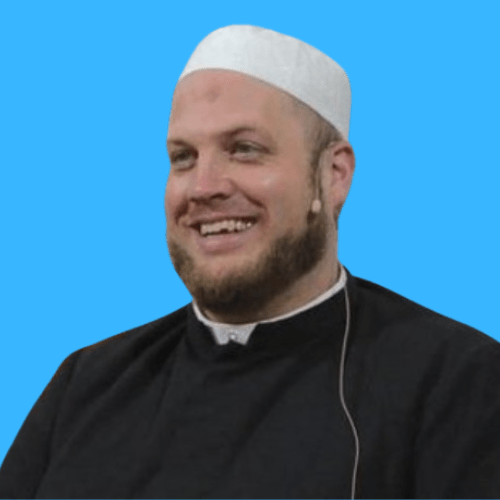
Imam Suhaib Webb is a renowned American Muslim scholar, speaker, and community leader who has had a profound impact on the landscape of Islam in the United States [2]. He is particularly influential for his efforts in dawah (Islamic outreach), his leadership within various Muslim communities, and his dedication to educating a new generation of American Muslims [3]. Webb is recognized for his ability to connect with diverse audiences, especially the youth, by addressing contemporary issues through a solidly grounded Islamic perspective [2, 4]. His major accomplishments include serving as the imam of the Islamic Society of Boston Cultural Center (ISBCC), one of the largest mosques in New England [5], and founding the Suhaib Webb Institute for Sacred Studies (SWISS), an online platform for Islamic education [6].
Early Life and Education
Date and Place of Birth: June 29, 1972, in Oklahoma, USA [1, 7]. Born William Webb into a Christian family with a grandfather who was a preacher, his early life was not overtly religious [1, 8]. As a teenager, he became involved in the local hip-hop scene as a DJ and producer [8, 9]. This period of his life also saw him associated with a local gang, a stark contrast to the path he would later choose [1, 8]. A significant turning point occurred in 1992 when, at the age of 20, he converted to Islam [1]. This pivotal decision reshaped his life’s trajectory, leading him away from his music career and towards dedicated Islamic scholarship [8]. Following his conversion, Webb pursued higher education at the University of Central Oklahoma, earning a bachelor’s degree in Education [10]. His passion for Islamic knowledge led him to study privately under a Senegalese shaykh to deepen his understanding [1]. To further his grasp of the Islamic sciences, he traveled to Egypt to study at the prestigious Al-Azhar University in Cairo, where he completed a four-year degree program in the College of Shari’ah [10, 11]. His dedication to the Qur’an culminated in him completing its memorization, earning the title of Hafiz [12].
Career and Leadership
Imam Webb’s career is marked by a series of impactful roles in community leadership and education across the United States. He has been instrumental in the development of several Islamic institutions and has been a vocal presence on the national stage. His leadership roles have included serving as the resident scholar for the Islamic Society of Greater Oklahoma City [13]. He gained national prominence after being appointed the imam of the Islamic Society of Boston Cultural Center (ISBCC) in 2011 [5]. During his time in Boston, he became a key voice for the American Muslim community, particularly in the aftermath of the 2013 Boston Marathon bombing, where he actively worked to condemn the attacks and offer a counternarrative to Islamophobia [14, 15]. Recognizing the need for accessible and authentic Islamic education, Imam Webb founded the Suhaib Webb Institute for Sacred Studies (SWISS) [6]. This online institute provides a platform for students worldwide to engage with classical Islamic texts and contemporary issues. Throughout his career, Imam Webb has been a sought-after speaker at national and international conferences, khutbahs (sermons), and university campuses [2]. His ability to articulate Islamic teachings in a culturally relevant American context has made him a popular figure among Muslim youth [4]. For his contributions, he has been recognized multiple times as one of the 500 Most Influential Muslims by the Royal Islamic Strategic Studies Centre in Jordan [2].

| Attribute | Details |
|---|---|
| Full Name | Suhaib Webb (صهيب ويب) |
| Date of Birth | June 29, 1972 [1] |
| Age | 53 (as of 2025) |
| Birthplace | Oklahoma, USA [7] |
| Gender | Male |
| Occupation | Imam, Scholar, Educator, Community Leader |
| Education | University of Central Oklahoma (B.A. in Education) [10], Al-Azhar University (Shari'ah Studies) [11] |
| Known For | Dawah, Youth Engagement, Founding SWISS [6], Former Imam of ISBCC [5] |
Career Timeline
Born as William Webb in Oklahoma, USA [1].
Converts to Islam at the age of 20 [1].
Enrolls at the University of Central Oklahoma, earning a bachelor's degree in Education [10].
Travels to Cairo, Egypt, to study at Al-Azhar University, completing a degree in Shari'ah [10, 11].
Serves as the resident scholar for the Islamic Society of Greater Oklahoma City [13].
Appointed as the imam of the Islamic Society of Boston Cultural Center (ISBCC) [5].
Becomes a prominent national voice for American Muslims in the wake of the Boston Marathon bombing [14, 15].
Founds the Suhaib Webb Institute for Sacred Studies (SWISS) [6].
Continues to teach, lecture, and lead community initiatives through SWISS and various platforms.
Philosophy and Views
Imam Suhaib Webb’s Islamic ideology can be described as rooted in traditional Islamic scholarship while being dynamically engaged with the modern world [3]. He identifies his creed as being based on the “Athari school of thought,” emphasizing adherence to the understanding of the earliest generations of Muslims (the Salaf) [16]. He is known for his nuanced positions on contemporary issues, advocating for an authentic American Muslim identity that is both faithful to Islamic principles and positively integrated into American society [3, 4]. He has been a vocal proponent of community service, interfaith dialogue, and civic engagement [14]. A notable aspect of his public discourse is his evolution on certain social issues. For instance, while he previously made statements describing homosexuality as an “evil inclination,” he later apologized for the hurt caused by his words [17]. He has since stated that while his religious view is that homosexual acts are sinful, he also affirms the constitutional right to marriage for all citizens [17, 18]. He has faced criticism from two main fronts: Islamophobic groups who have sought to misrepresent his views [19] and certain ultraconservative factions within the Muslim community who disagree with his inclusive and context-sensitive approach [4]. He has consistently responded to such criticism by emphasizing scholarly discourse and good manners [19].