Skip to content
Biography of Professor Tariq Ramadan
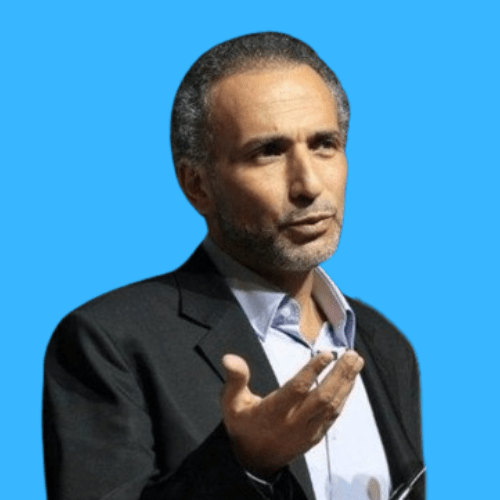
Tariq Ramadan (طارق رمضان) is a highly influential and controversial Swiss Muslim academic, philosopher, and writer. He is renowned globally for his work on contemporary Islamic studies, where he has advocated for the development of a modern European Muslim identity. As the grandson of Hassan al-Banna, founder of the Muslim Brotherhood, Ramadan inherited a legacy of Islamic activism, which he channeled into an academic and intellectual framework. His major accomplishments include authoring numerous books on Islam in the West, holding prestigious professorships at institutions like the University of Oxford, and engaging millions of Muslims through his lectures and debates. However, his career has been overshadowed in recent years by serious legal challenges, including multiple allegations of sexual assault, which have profoundly impacted his public and professional life.
Early Life and Education
Date and Place of Birth: August 26, 1962, in Geneva, Switzerland.
Tariq Ramadan was born into a prominent Egyptian family in exile. His father, Said Ramadan, was a leading figure in the Muslim Brotherhood and was exiled from Egypt by Gamal Abdel Nasser. His mother, Wafa Al-Bana, was the eldest daughter of Hassan al-Banna, the founder of the Muslim Brotherhood. This lineage placed him at the heart of modern Islamic intellectual and political history from birth. He was raised in a multilingual environment in Switzerland, speaking both Arabic and French.
His initial education was secular, completed within the Swiss school system. For his higher education, he attended the University of Geneva, where he earned a Master’s degree in Philosophy and French literature and later a PhD in Arabic and Islamic studies. His doctoral thesis was on his grandfather, Hassan al-Banna, and the formation of his ideology. To deepen his religious knowledge, Ramadan also studied classical Islamic sciences with scholars in Cairo, including at Al-Azhar University, though he did not receive a formal degree from there. This dual education in both Western philosophy and classical Islamic scholarship became the foundation of his intellectual approach.
Career and Leadership
Ramadan began his career teaching at a secondary school in Geneva before transitioning into academia and public intellectualism.
1990s: He became a prominent voice for young European Muslims, founding the
Movement of Swiss Muslims and gaining recognition through his lectures across Europe. He emphasized that Muslims could be fully loyal citizens of their Western countries while adhering to their faith.
2004: He was offered a tenured professorship at the University of Notre Dame in the United States. However, the U.S. government, under the Patriot Act, revoked his visa, citing that he had donated to charities linked to Hamas. He challenged the decision, and the ban was eventually lifted in 2010 after it was revealed there was no evidence of him supporting terrorist organizations.
2005-2009: He worked as a visiting fellow at St Antony’s College, University of Oxford, and was a senior research fellow at Lokahi Foundation. He also served as an advisor on religion to the British government.
2009-2017: He was appointed Professor of Contemporary Islamic Studies at the
University of Oxford. During this time, he also taught at the Faculty of Theology in Oxford and directed the Research Centre of Islamic Legislation and Ethics (CILE) in Doha, Qatar.
Public Appearances: Ramadan became a global figure, known for his charismatic public speeches, television debates, and prolific writing. He was a regular on platforms like BBC’s Doha Debates and was named by Time magazine in 2004 as one of the 100 most influential innovators of the 21st century.
He has not received major public awards, largely due to the controversial nature of his work and later, his personal life.

| Attribute | Details |
|---|---|
| Full Name | Tariq Ramadan (طارق رمضان) |
| Date of Birth | August 26, 1962 |
| Age | 63 (as of 2025) |
| Birthplace | Geneva, Switzerland |
| Gender | Male |
| Occupation | Academic, Philosopher, Author |
| Education | PhD in Arabic and Islamic Studies (University of Geneva) |
| Known For | Advocating for a "European Islam," scholarship on contemporary Islamic issues, and major sexual assault controversies. |
Career Timeline
Philosophy and Views
Ramadan’s core intellectual project has been to articulate a vision for a “European Islam” or “Western Islam.” His approach can be summarized as follows:
- Reformist and Contextual: He argued that the principles of Islam (usul) are universal and unchanging, but their application (furu′) must be adapted to the specific context. He advocated for a reading of Islamic texts that is compatible with European secular culture, democracy, and modern life.
- “Shahadah” and Citizenship: He reinterpreted the concept of shahadah (testimony) not just as a declaration of faith, but as a commitment to social justice and ethical contribution to society. He encouraged Muslims to be active, engaged citizens who work for the betterment of their communities.
- Controversial Positions: Ramadan was often a critic of both literalist Salafi interpretations of Islam and repressive policies in the Muslim world. He was also a sharp critic of Western foreign policy in the Middle East. His nuanced, and sometimes ambiguous, positions on issues like the veil, terrorism, and blasphemy drew criticism from both conservative Muslims and secular critics. The latter often accused him of “double-speak”—presenting a moderate message to Western audiences while holding a more radical Islamist agenda in private, a charge he always denied.
- Sexual Assault Allegations: In 2017, his career came to a halt when multiple women in France and Switzerland accused him of rape and sexual assault. He was arrested in France in 2018 and held in pretrial detention for nearly ten months. He has consistently maintained his innocence, claiming the encounters were consensual. In May 2023, a Swiss court acquitted him of rape charges in one case. However, he still faces trial in France on charges involving multiple other accusers. These controversies led to his dismissal from Oxford and CILE and have irreparably damaged his reputation.
Personal Life and Challenges
- Family: Tariq Ramadan has been married to Iman Ramadan since 1986, and they have four children (three sons and one daughter). His family has stood by him publicly throughout his legal battles.
- Major Challenges: The most significant challenge of his life has been the ongoing legal proceedings related to the sexual assault allegations. The ordeal has included imprisonment, loss of his academic positions, and immense public scrutiny.
- Health: During his imprisonment, it was revealed that he suffers from multiple sclerosis, a condition that worsened significantly during his detention and remains a serious health concern.
- Community Perception: Before the allegations, Ramadan was a hero to many young Western Muslims who saw him as a brilliant intellectual capable of bridging Islam and modernity. To his critics, he was a dangerous ideologue. Since 2017, the Muslim community has been deeply divided. Some view him as the victim of a conspiracy to silence a prominent Muslim voice, while others believe his accusers and see him as a profound moral failure.